
General information, not legal advice. Whether any step described here helps or hurts a claim depends on your facts, your contract, and your deadlines. Nothing on this site tells you what to do in your situation; an attorney who has reviewed your documents can.
The 319.14 disclosure rule exists because a rebuilt or flood-damaged car can look identical to a clean one. Section 319.14, Florida Statutes, requires the state to stamp certain vehicle histories on the title and requires a seller who knows the history to disclose it in writing before the sale. This post explains how that statute works, how it connects to civil claims, and what usually decides these disputes. For the full picture of this claim type, see our page on undisclosed branded title claims in Florida.
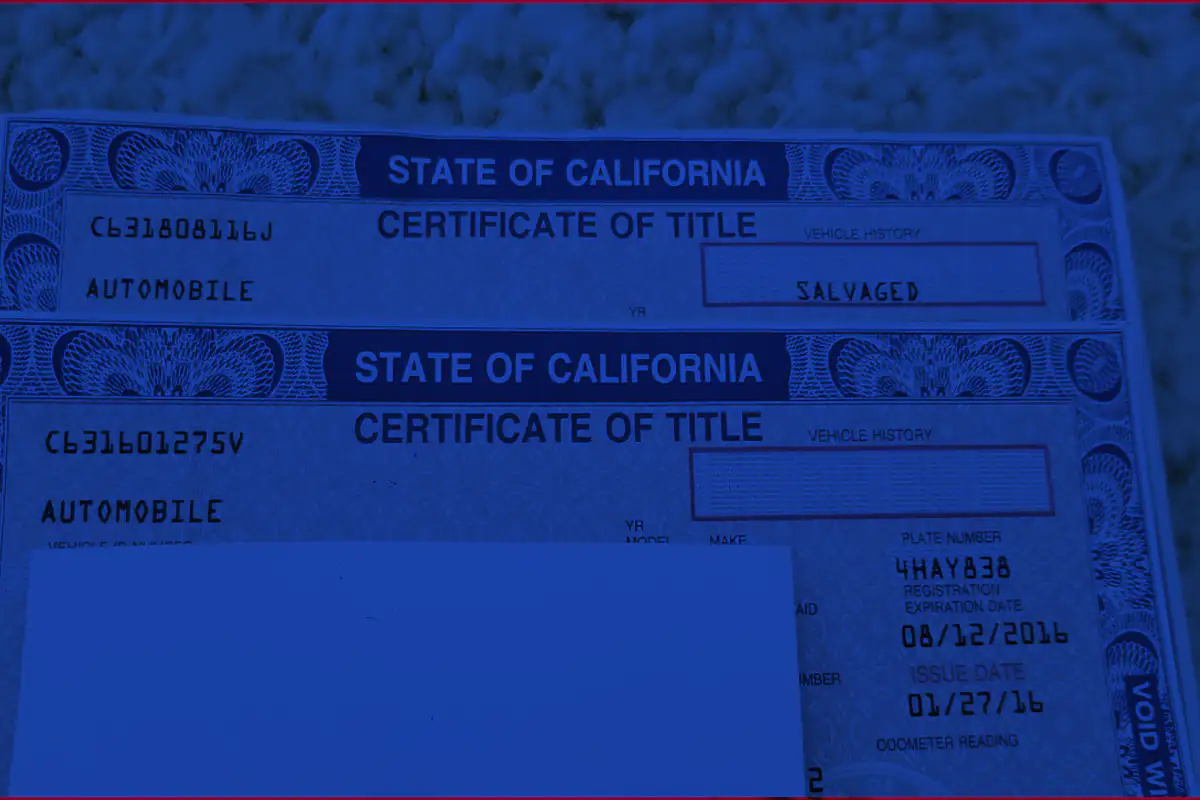
What does the 319.14 disclosure require of a Florida seller?
Two duties run side by side in the statute. One is a titling duty: a person may not knowingly sell, offer for sale, or exchange a covered vehicle until the Florida Department of Highway Safety and Motor Vehicles has stamped the certificate of title, and the registration, with the vehicle's history. The other is a disclosure duty: the seller must tell the buyer in writing, before the sale, about the prior condition or use. The statute also reaches advertising, so a listing for the vehicle has to reflect the history as well.
The title stamp
The stamp is how the state makes a history permanent. Once the department brands the title, the notation follows the vehicle through later transfers, which is why a brand missing from a title usually means something went wrong earlier, such as an out-of-state retitling or an application that left the history out.
The written disclosure
The disclosure has to be written and has to come before the sale. A salesperson's verbal comment, or a line buried in a stack of closing documents, raises obvious questions about whether the statute was met. The text of the statute is on the Florida Senate's statutes page for section 319.14. A violation is a second-degree misdemeanor.
Statute in brief. Section 319.14 prohibits knowing sales of covered vehicles before the title is branded, and it requires written disclosure of the prior condition or use before the sale. Paraphrased here; the statute's own text controls.
Which vehicles does section 319.14 cover?
The statute lists the histories that trigger it. They include rebuilt vehicles, vehicles assembled from parts, kit cars, replicas, custom vehicles, flood vehicles, former taxis, police vehicles, and short-term-lease or rental vehicles, along with manufacturer's buybacks. Each has a separate definition in the Florida statutes, and whether a particular car falls into one is a question of fact.
Salvage is a related but separate topic. Section 319.30, Florida Statutes, governs salvage titling, including the repair-cost threshold that makes a vehicle a salvage vehicle, and a rebuilt brand is what replaces salvage after the car passes the state's rebuilt inspection. Our explainer on rebuilt, salvage, and flood titles in Florida walks through how those labels differ.
Not every troubled history produces a brand. A car that was declared a total loss but never received a salvage title may show a clean title, which is covered in our post on a clean title that hides a total loss. Flood cars have their own pattern of hidden damage, described in how flood titles surface in Florida.
What does "knowingly" mean, and how is it proven?
Section 319.14 is aimed at knowing sales. That word matters in a criminal setting, and it also shapes how buyers' lawyers build civil cases. A dealer rarely admits it knew; the proof usually sits in paper the dealer already has.
How knowledge is shown
Dealers buy most inventory at auctions or from other dealers, and those transactions leave a trail. Auction condition reports, the prior title, announcements of a branded or total-loss history, repair invoices, and the dealer's own title application can all show what the dealer knew when it listed the car. A title that arrives with a brand and then disappears from the sales paperwork tells its own story.
Why the statute and FDUTPA differ
The Florida Deceptive and Unfair Trade Practices Act, sections 501.201 to 501.213, generally asks whether a practice was likely to deceive a reasonable consumer. It does not usually require proof that the seller meant to deceive. That difference is one reason a buyer's civil case can look different from a criminal case under the same set of facts.
Does "as is" or a clean history report change the duty?
An "as is" sale disclaims warranties. It does not, on its own, answer the question of whether the seller told the truth about the vehicle's history or met the written-disclosure requirement of section 319.14. The FTC's Used Car Rule, 16 C.F.R. Part 455, requires the Buyers Guide on used vehicles, and the guide governs warranty coverage rather than title history. For more on that distinction, see what "as is" means in a Florida used-car sale.
A clean vehicle history report is also not a safe harbor. Reports depend on what insurers, auctions, and states report, and a gap in the report does not erase the dealer's own records. Telling a buyer that a car has a "clean title" or that prior damage was "minor" when the dealer's file says otherwise is the kind of statement that section 501.976, Florida Statutes, treats as an unfair dealer practice.
Buyers often sign an acknowledgment at closing, such as a line that the car was inspected or that the buyer received a history report. How much weight that carries depends on the exact wording, on what the dealer actually knew, and on whether the document is a release. A release usually waives the claim it describes, so its language is worth reading closely.
How does a 319.14 violation become a civil claim?
Section 319.14 itself carries a criminal penalty, so a buyer's recovery generally runs through other law. The most common route is FDUTPA. A violation of a statute that prohibits unfair or deceptive practices can support a FDUTPA claim under section 501.203, and the list of dealer practices in section 501.976 is a more direct fit when the dealer misrepresented condition or history.
FDUTPA actual damages are typically measured by the difference between the value of the vehicle as represented and as delivered. Under section 501.2105, a court may award attorney's fees to the prevailing party, which can run in either direction. Other theories can apply too, including common-law fraud and revocation of acceptance under section 672.608, depending on the facts.
Before suit, section 501.98 requires a written demand to the dealer, and the dealer has 30 days to respond. The mechanics are covered in suing a car dealer in Florida and the pre-suit steps the statute requires. Which theory fits a given purchase is a question for an attorney who has reviewed the documents.
What evidence usually decides a branded title case?
These cases are paper cases. The documents that prove what the dealer knew and what the buyer was told tend to decide them, so each category matters on its own.
- The certificate of title and registration, showing whether a brand appears and when it was applied.
- The buyer's order, bill of sale, and every document signed at closing, including any acknowledgment or release.
- The advertisement or online listing, saved with its date, since section 319.14 reaches advertising.
- Text messages, emails, and chat records in which the dealer described the car's history.
- Dealer acquisition records, such as auction paperwork and the prior title, which usually surface in discovery.
- Vehicle history reports and the National Motor Vehicle Title Information System, available through the federal vehicle history program.
- A mechanic's or body-shop report documenting prior structural, flood, or collision repair.
The strongest files tend to pair a document showing the dealer knew with a document showing the buyer was told something different. A title that carries no brand while the dealer's acquisition records show one is a common example.
What matters if the brand surfaces after the sale?
General information, not advice for your situation. Whether any step helps or hurts a claim depends on your facts, your contract, and your deadlines; an attorney can tell you which applies.
Several facts usually shape the outcome. One is when the brand was discovered and how, for example through a later title check, an insurance inspection, or a mechanic's finding. Another is whether the title the buyer received was branded, since an unbranded title raises questions about how the history was dropped. A third is what the dealer said in writing before the sale, because section 319.14 turns on the written disclosure.
Financing complicates things. Missing payments can trigger default regardless of the dealer's conduct, and a lender is a separate party with its own rights under the contract. A signed release usually waives the claim it covers, which is one reason documents are worth reviewing carefully.
Every claim has a deadline, some are short, and the clock can start earlier than people expect. Which deadline applies to a particular purchase depends on the claim, the jurisdiction, and the facts, and is a question for an attorney who has reviewed the documents.
Florida has no cooling-off period for vehicle purchases, so a signed deal does not carry an automatic right to unwind it. See what applies instead of a cooling-off period. Regulatory complaints, such as one filed with the Florida Attorney General's consumer protection division, are separate from a private claim and do not themselves recover money for a buyer.
Frequently asked questions
Does the 319.14 disclosure have to be in writing?
Does section 319.14 apply to private sellers or only dealers?
Is a 319.14 violation a crime or a civil claim?
Is a salvage title covered by section 319.14?
If an attorney can assist, you'll receive an intake questionnaire and retainer agreement.
This page is attorney advertising and general information, not legal advice. Reading it does not create an attorney-client relationship. Results depend on the facts and law of each matter; prospective clients may not obtain similar results. Statutory damages described are as set by law and are before deductions for attorney's fees and costs. Sue Your Dealer – A Law Firm, Hollywood, Florida · By appointment only · (954) 321-0507.