
General information, not legal advice. Whether any step described here helps or hurts a claim depends on your facts, your contract, and your deadlines. Nothing on this site tells you what to do in your situation; an attorney who has reviewed your documents can.
An undisclosed salvage or rebuilt title in D.C. is often one of the more straightforward dealer fraud cases to prove, because the District's title statute leaves the dealer little room to argue it didn't know. Chapter 13A of Title 50 of the D.C. Code requires a salvage vehicle to move only on a Salvage Title and a rebuilt one only on a Rebuilt Salvage Title, requires written flood notice before any transfer, and makes misrepresenting a salvage vehicle a criminal offense. The Consumer Protection Procedures Act turns the omission into a civil claim for treble damages or $1,500 per violation plus attorney's fees. For how the firm handles District matters, see our DC auto fraud attorney page.
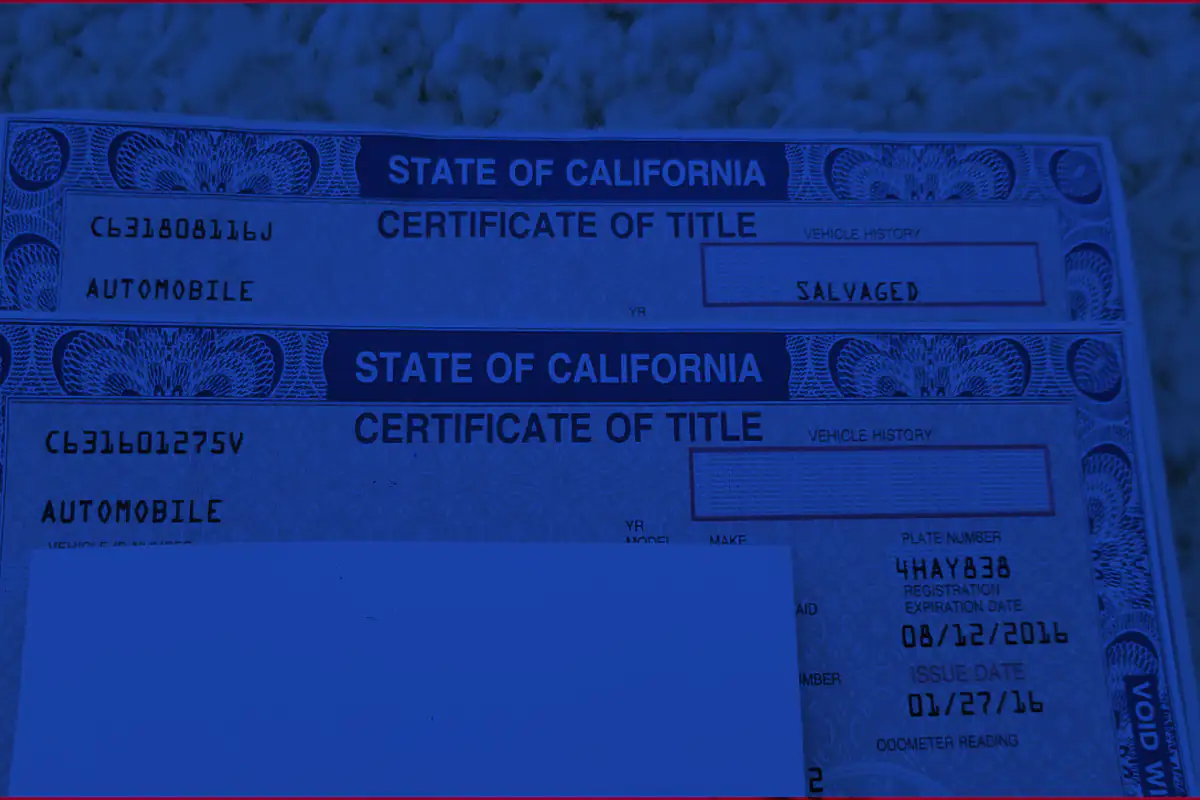
What Are Salvage, Rebuilt Salvage, and Flood Vehicles Under D.C. Law?
D.C. Code § 50-1331.01 defines the categories. A salvage vehicle is one damaged, wrecked, or submerged to the point that the cost of parts and labor to rebuild it for legal road use exceeds 75 percent of its pre-damage retail value. A rebuilt salvage vehicle is one previously issued a Salvage Title that has since passed inspection. A flood vehicle is one submerged to the point that water entered the passenger or trunk compartment.
Under § 50-1331.05, a salvage vehicle may not be registered under the ordinary registration statute, and ownership may be transferred only by a Salvage Title. Under § 50-1331.06, once a salvage vehicle passes inspection the Department issues a Rebuilt Salvage Title, and ownership may be transferred only by that title. The brand follows the car. It does not come off because a dealer reconditioned the vehicle or because a new state issued a title.
What Must a D.C. Dealer Disclose About a Branded Title?
Three layers of duty apply.
The title itself
Because §§ 50-1331.05 and 50-1331.06 require transfer by Salvage or Rebuilt Salvage Title, the document you sign at closing should carry the brand. A dealer that handed you a clean title on a vehicle it acquired on a branded one may have falsified a title application or transferred the vehicle on a document the statute does not permit. Section 50-1331.08 makes false statements on a title application, forging vehicle documents, and misrepresenting a salvage vehicle punishable by fine and up to 180 days' imprisonment.
Flood notice
Section 50-1331.03 requires the owner of a flood vehicle to give the transferee written notice before the transfer and to notify the Department. A dealer is an owner while the car sits in inventory. There is no exception for "the CARFAX didn't show it."
The used-car damage disclosure
D.C. Code § 50-505 requires a used-vehicle dealer to give the buyer written notice of any known material mechanical defect, of damage from fire, water, collision, or other causes costing more than $1,000 to repair, and of whether the dealer inspected the vehicle. The implementing rule, 16 DCMR § 1421, puts the disclosure on the car order and bill of sale in the largest type size on the document and requires a windshield sign stating whether the vehicle was inspected. A salvage vehicle is, by definition, one whose repair costs exceeded 75 percent of its value, so a sale of one generally triggers § 50-505.
DLCP summarized these obligations in a March 2026 notice on transparency at used car dealerships. The FTC Buyers Guide's "as is" box disclaims implied warranties; it does not disclaim any of these duties. See what "as is" means.
How the CPPA Turns an Omission Into a Claim
Chapter 13A and § 50-505 create the duties; the Consumer Protection Procedures Act creates the lawsuit. D.C. Code § 28-3904(f) makes it an unlawful trade practice to fail to state a material fact if the omission tends to mislead, and § 28-3904(d) prohibits representing that goods are of a particular standard or quality when they are not. A salvage or flood history affects safety, insurability, financing, and resale value, and it is exactly the information the Council required on the title. Selling you the vehicle as clean may be a (d) misrepresentation; saying nothing may be an (f) omission.
The statute applies whether or not any consumer is in fact misled, deceived, or damaged, so "we didn't know" is generally not a defense to the CPPA count. And because § 28-3905(k)(1) allows suit for a trade practice that violates any law of the District, a § 50-505 failure and a Chapter 13A title violation can themselves be actionable through the CPPA. The mechanics are in suing a car dealer under the DC Consumer Protection Procedures Act.
Title Washing and Out-of-State Brands
Most branded cars sold in the District were branded somewhere else. A vehicle totaled in Maryland or Virginia, rebuilt, and retitled in a state with looser brand-carryover rules can arrive in D.C. with a title that looks clean. The dealer that bought it at auction, however, received the condition report and the prior title, both showing the brand. That is the evidence: the auction listing and invoice, the prior state's title record, and the NMVTIS history, which tracks brands across states.
Our undisclosed branded title page and the post on total-loss vehicles with clean titles explain how brands get lost between states and traced back through the federal NMVTIS record.
What Can You Recover?
Under D.C. Code § 28-3905(k)(2), the court may award treble damages or $1,500 per violation, whichever is greater, reasonable attorney's fees, punitive damages, an injunction, and restitution. Actual damages in a branded-title case are typically the difference between the price you paid for a supposedly clean car and the value of a rebuilt salvage vehicle, often a large fraction of the price. Tripled, with fees shifted to the dealer, the exposure is significant. Where the facts support it, the remedy can be to unwind the sale.
If the paperwork also misstated mileage, the Federal Odometer Act's remedy of three times actual damages or $10,000 runs alongside; see odometer rollback in Washington, D.C. These figures are statutory amounts, not results in any particular case.
What Matters if You Discover a Hidden Brand
- The recordsAn NMVTIS-based history report and the prior state's title record show every brand and its date, which is what the omission claim is built from.
- The sale documentsThe buyer's order, bill of sale, title application, Buyers Guide, and any written disclosure show whether the § 50-505 disclosure appears at all and in what type size.
- An inspectionAn independent body shop can document structural repair, flood residue, and airbag deployment. Photographs and a written estimate are evidence.
- New paperwork can release the claimDealers confronted with a brand sometimes offer a "trade" into another vehicle on a new contract, and that contract often contains a release of the original claim. Whether to sign is a decision to make with counsel who has read it.
- EvaluationDocuments submitted through the free case evaluation are reviewed by an attorney. CPPA claims generally carry three years under D.C. Code § 12-301 and Automobile Consumer Protection Act claims four years from delivery under § 50-507; the clock can run differently depending on the claim and the facts.
Salvage and Rebuilt Titles in D.C.: FAQ
Can a rebuilt salvage vehicle be sold legally in Washington, D.C.?
The dealer says the CARFAX was clean, so it isn't responsible. Is that right?
What if the brand is from another state and not on the D.C. title?
Can I return the car and get my money back?
Found out your "clean" car has a salvage history?
Start a free case evaluationSubmit a free case evaluation. If an attorney can assist, you'll receive an intake questionnaire and retainer agreement.
This page is attorney advertising and general information, not legal advice. Reading it does not create an attorney-client relationship. Results depend on the facts and law of each matter; prospective clients may not obtain similar results. Statutory damages described are as set by law and are before deductions for attorney's fees and costs. Sue Your Dealer – A Law Firm, Hollywood, Florida · By appointment only · (954) 321-0507.