
Florida auto fraud · Title fraud
Undisclosed Salvage or Branded Title in Florida: When the Dealer Hid the Car's Past
Undisclosed salvage title Florida cases are among the most common auto fraud claims we see. Salvage, rebuilt, flood, prior total loss, manufacturer buyback: section 319.14, Florida Statutes, requires the seller to tell you in writing before the sale. If the dealer knew and didn't, Florida law can give the buyer a claim for the value lost, with attorney's fees recoverable from the dealer under FDUTPA.
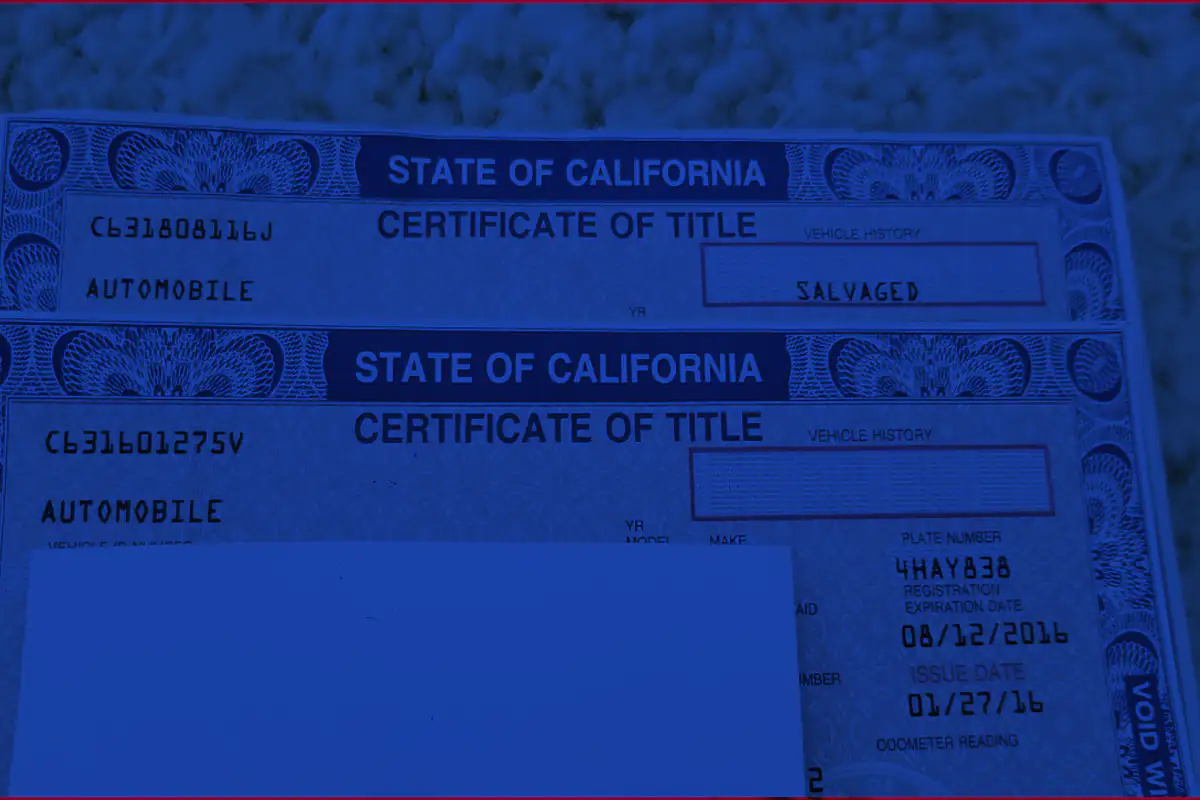
What Is a Branded Title?
A title brand is a permanent notation the state places on a vehicle's certificate of title to record a significant event in its history. It follows the vehicle through every later transfer, and section 319.14, Florida Statutes, requires the Florida Department of Highway Safety and Motor Vehicles to stamp the title and registration to reflect it. The brands that generate lawsuits are these.
Salvage
An insurer declared the vehicle a total loss, usually after a collision, flood, or theft, and paid the owner for it. Under section 319.30, Florida Statutes, a salvage vehicle cannot be titled for road use again until it is repaired and passes a state rebuilt inspection.
Rebuilt
A former salvage vehicle that was repaired and passed the inspection. "Rebuilt" replaces "salvage" on the title, but the history of total-loss damage does not go away, and the brand stays.
Flood
The vehicle sustained water damage. Flood cars carry long-term electrical, corrosion, and mold problems that surface months after the sale, and Florida's hurricane seasons put thousands of them into the used-car supply.
Manufacturer's buyback
The manufacturer repurchased the vehicle under a state lemon law, chapter 681 in Florida, because of a defect it couldn't fix. Florida titles these as "Manufacturer's Buyback," and the defect history must be disclosed to the next buyer.
Related brands include "assembled from parts," "kit car," "replica," "custom," and prior use as a taxi, police vehicle, or short-term rental. A prior total loss that never produced a salvage title is not a brand but is still a history the dealer may not misrepresent. That situation is covered in Clean Title but a Total Loss on CARFAX.
Undisclosed Salvage Title Florida Law: What Must a Dealer Disclose?
Everything above, in writing, before the sale. Three statutes overlap here, and a dealer that hides a brand may violate all three.
No person may knowingly sell, offer, or exchange a rebuilt, assembled-from-parts, kit, replica, custom, or flood vehicle, a former taxi, police, or short-term-lease vehicle, or a manufacturer's buyback until the department has stamped the title with the brand. The seller must disclose the prior condition or use in writing before the sale, and any advertisement for the vehicle must state it. A violation is a second-degree misdemeanor. The brand must also appear on the registration certificate.
The legislature's list of things a licensed motor vehicle dealer may not do includes misrepresenting a vehicle's condition, prior use, or history. Telling a buyer a rebuilt car has a "clean title," or describing prior total-loss damage as "minor," is on the list. Each listed act is an unfair or deceptive practice by definition, so a buyer generally doesn't have to prove the dealer's state of mind as in a common-law fraud case.
The Florida Deceptive and Unfair Trade Practices Act is the statute the case is filed under. A section 501.976 violation is a FDUTPA violation, and so is any other deceptive act in the sale, such as burying the brand in a stack of documents while the salesperson says the car "has never been in an accident." FDUTPA provides actual damages and, under section 501.2105, attorney's fees and costs to the prevailing party. Before a consumer sues a licensed dealer under FDUTPA, section 501.98 requires a written demand; the process is covered in Suing a Car Dealer in Florida.
The FTC's Used Car Rule, 16 C.F.R. Part 455, adds a federal overlay: the Buyers Guide becomes part of the contract, and an "as is" checkbox disclaims implied warranties, not the duty to disclose a brand. "As is" doesn't mean "no fraud."
How Do Dealers Hide a Branded Title?
Some of this is deliberate. Some of it is a dealer choosing not to look. Under section 319.14 and FDUTPA, both can be actionable.
- Title washing. A vehicle branded in one state is re-titled in another whose system doesn't carry over the brand, or the paper title is altered before the Florida application is filed. The car arrives on the lot with a "clean" title and a history report that tells a different story.
- Selling off the history report. The dealer pulled a CARFAX or AutoCheck, saw the salvage or total-loss entry, and sold the car anyway. Or it printed only the first page and handed you that.
- Ignoring the auction sheet. Wholesale auctions announce title brands and structural damage on the block and on the condition report. A dealer that bought a car announced as "rebuilt" and sold it as clean has little room to dispute knowledge.
- Cosmetic reconditioning. A total-loss car is straightened, painted, and detailed to look new while frame damage, improper welds, or a corroded wiring harness remain underneath.
- Burying the disclosure. A one-line "rebuilt" notation on page nine of the deal jacket, signed with forty other pages after the salesperson spent two hours calling the car clean. Whether that satisfies section 319.14 is a fact question, and the surrounding representations can still support a FDUTPA claim.
What Are the Signs of a Rebuilt or Flood-Damaged Car?
- A history report shows a total loss, salvage auction, or insurance claim, even if the title you were given says nothing.
- The title was issued in a different state from where the car was previously registered, shortly before the dealer acquired it.
- Paint overspray on trim or seals, mismatched panel colors, uneven body gaps, or tool marks on fender and hood bolts.
- New carpet in an otherwise worn car, a musty smell, waterline stains, silt under the seats or in the spare-tire well, or rust on unpainted metal under the dash (flood indicators).
- Electrical faults with no clear cause, or an airbag light that is on or has been disabled.
- A price well below market for the year, make, and mileage.
What Shows an Undisclosed Salvage Title?
- The title itself The Florida certificate of title has a "brands" field. If it shows "rebuilt," "flood," "salvage," or "manufacturer's buyback" and you weren't told in writing before signing, that is the core of the case.
- The FLHSMV record The Florida Department of Highway Safety and Motor Vehicles offers a motor vehicle information check by VIN and, on request, a title history showing prior titles, brands, and odometer readings at each transfer.
- An NMVTIS report The National Motor Vehicle Title Information System is the federal database that collects brand, salvage, and total-loss data from state DMVs, insurers, and salvage yards. It is the tool built to catch title washing across state lines, and approved providers sell reports for a few dollars.
- CARFAX or AutoCheck Commercial reports add auction records, service history, and accident reports. If the dealer's copy is missing the total-loss entry that yours shows, both copies are evidence of what the dealer knew.
- An independent inspection A body shop or independent mechanic can identify frame repair, flood residue, and non-factory welds in an hour. The written findings become evidence.
What Can You Recover for an Undisclosed Branded Title?
The core measure of damages is the difference between what you paid and what the car was actually worth as a rebuilt, flood, or buyback vehicle, a gap that persists for the life of the car. Depending on the facts, the law may also allow recovery of:
- Repair costs for the damage that was concealed and the problems it caused.
- Rescission or revocation of acceptance under section 672.608, Florida Statutes: the car goes back and the purchase price is recovered, when the nonconformity substantially impairs the car's value and the concealment made it hard to discover.
- Attorney's fees and costs from the dealer under section 501.2105.
- Odometer Act damages, the greater of three times actual damages or $10,000 under 49 U.S.C. § 32710, if the same car also had a rolled-back odometer. Branded vehicles are frequent targets for odometer fraud. That $10,000 figure is an odometer remedy; FDUTPA itself awards actual damages, not a fixed statutory amount.
- A surety bond claim. Every licensed Florida dealer posts a $25,000 surety bond under section 320.27(10), which matters when the dealer has closed or can't pay.
Dollar figures here are statutory amounts, not results in any case. What a buyer recovers depends on the documents, the car, and the dealer.
What Matters Now
- The buyer's order, retail installment contract, title or title application, Buyers Guide, the ad or online listing, and any history report the dealer gave you are what the claim is built on. A screenshot of the listing preserves it before it comes down.
- Your own history report and the FLHSMV title record show what the dealer could have seen.
- An inspection's written findings and photos are the physical evidence of the concealed damage.
- A release or a "goodwill" credit usually waives the claim; that is a document to have reviewed before signing.
- The claim is against the dealer, not the lender; missed loan payments can trigger default and repossession regardless of the dealer's conduct.
- A complaint to the dealer's licensing agency runs separately from the civil claim; the process is in How to File a Complaint Against a Florida Dealer.
- A free case evaluation is how we review the documents. If an attorney can assist, you'll receive an intake questionnaire and retainer agreement.
FDUTPA, a written-contract claim, and an Odometer Act claim (if there is one) each carry their own deadline, and the clock can start earlier than people expect. Which deadline applies to a particular purchase depends on the claim and the facts, and is a question for an attorney who has reviewed the documents.
Branded Title Questions
Is it illegal for a dealer to sell a salvage or rebuilt car in Florida?
The dealer says the brand was in the paperwork I signed. Do I still have a claim?
My title says clean, but CARFAX shows a total loss. What happened?
Can I get $10,000 for an undisclosed branded title?
How do I check a used car for a branded title before I buy?
Did the dealer hide the car's history?
Submit a free case evaluationUpload your documents and an attorney will review them. No cost, no obligation.
This page is attorney advertising and general information, not legal advice. Reading it does not create an attorney-client relationship. Results depend on the facts and law of each matter; prospective clients may not obtain similar results. Statutory damages described are as set by law and are before deductions for attorney's fees and costs. Sue Your Dealer – A Law Firm, Hollywood, Florida · By appointment only · (954) 321-0507.