
General information, not legal advice. Whether any step described here helps or hurts a claim depends on your facts, your contract, and your deadlines. Nothing on this site tells you what to do in your situation; an attorney who has reviewed your documents can.
An undisclosed salvage or rebuilt title in Texas is a title fraud claim with a wrinkle that matters to you as a buyer: Texas sets its salvage threshold at the full value of the car. Under Transportation Code section 501.091(15), a car is a salvage motor vehicle only when the cost of repairs exceeds its actual cash value before the damage, the 100% rule. That means your car can have been wrecked, totaled by an insurer, and rebuilt without ever carrying a Texas salvage brand, so the paper history matters less than the actual history. This post explains the rule, what a dealer has to disclose, and what a Texas auto fraud attorney does when a dealer stays quiet.
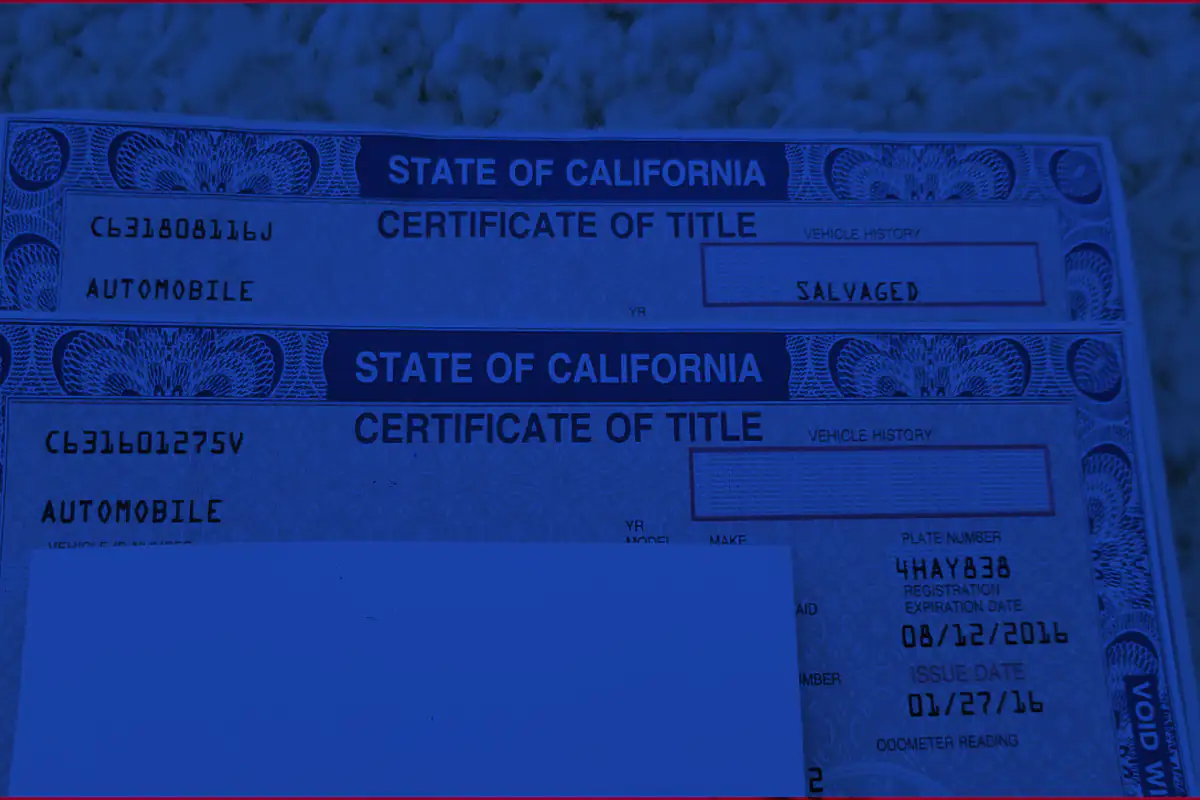
What Is the Texas 100% Rule?
Transportation Code section 501.091(15) defines a salvage motor vehicle as one that has damage to, or is missing, a major component part to the extent that the cost of repairs, including parts and labor but excluding repainting and sales tax, exceeds the actual cash value of the vehicle immediately before the damage. Section 501.091(1) defines actual cash value as the market value. A vehicle that arrives from another state under a salvage title or comparable document is salvage in Texas as well. Section 501.091(9) defines a nonrepairable motor vehicle as one damaged, wrecked, or burned to the point that its only remaining value is as parts or scrap.
Texas brands a title salvage only when repairs exceed 100 percent of the car's value. A Texas car with $18,000 in collision repairs on a $20,000 pre-damage value never becomes salvage under state law and can carry a clean Texas title through the rebuild and the resale. Insurers routinely declare a total loss well below that line, so a car can be paid out as totaled and still be retitled clean; our post on total-loss cars with clean titles explains how the insurer's decision and the title brand diverge. A clean Texas title is not evidence that the car was never wrecked.
What Can and Can't Be Done With a Salvage Title?
Under section 501.09111, the holder of a salvage vehicle title may possess, transport, dismantle, repair, rebuild, reconstruct, and sell the vehicle, but may not operate it on a public highway, register it, or permit it to be operated. A nonrepairable vehicle title is more restrictive: the vehicle may be dismantled, scrapped, or sold for parts, but may not be repaired, rebuilt, registered, or driven, and under section 501.100(f) the Department may not issue a regular title based on a nonrepairable title. If you were sold a car that is still on a salvage or nonrepairable title, you were sold a car that cannot lawfully be registered or driven in that condition, and the dealer's duty to transfer good title under Transportation Code section 503.033 may be in play.
What Does a Rebuilt Title Have to Say?
A salvage vehicle that has been repaired gets back on the road through section 501.100. The owner applies for a new title with a description of each major component part used in the repair, the name of each person the parts came from, and the parts' identification numbers, and pays a rebuilder fee. Section 501.100(c) is the disclosure provision: the title issued after a rebuild must describe or disclose the vehicle's former condition in a manner reasonably understandable to a potential purchaser. That is the "rebuilt salvage" brand you see on a Texas title. It follows the car, and the Texas DMV's Title Check service, which runs the VIN through the National Motor Vehicle Title Information System, shows salvage, rebuilt, flood, and total-loss records from every participating state for a few dollars.
Does a Texas Dealer Have to Disclose a Salvage or Rebuilt History?
Yes, on two levels. At the licensing level, the Texas DMV's dealer rules at 43 Tex. Admin. Code § 215.141 list, among the grounds for sanctioning a dealer, knowingly failing to disclose that a motor vehicle has been repaired, rebuilt, or reconstructed and issued a title under section 501.100. Occupations Code section 2301.651(a) lets the Department deny, suspend, or revoke the license of a dealer that wilfully defrauds a purchaser or violates any law relating to the sale of motor vehicles, and section 2301.801 authorizes a civil penalty of up to $10,000 per violation. Those rules protect the license, not you directly, but a complaint to the Enforcement Division can be leverage.
At the buyer level, the duty runs through the Deceptive Trade Practices Act. Section 17.46(b)(24) makes it a deceptive act to fail to disclose information known at the time of the transaction if the omission was intended to induce the consumer into a transaction the consumer would not otherwise have entered. A dealer that bought the car at a salvage auction, or received a title branded rebuilt, is hard-pressed to say it didn't know. Section 17.46(b)(5) and (b)(7) reach the affirmative lie: representing that the car has characteristics it does not have, or is of a standard or quality it is not. Representing a rebuilt wreck to you as a clean one-owner car may be both.
The wrinkle is the car that never crossed the 100 percent line. There is no Texas title brand to hide, and no section 215.141 violation for failing to mention a repair that never went through section 501.100. The DTPA still applies: if the dealer knew about the collision repair or the insurer's total-loss payout and stayed silent to close the sale, that may be a (b)(24) omission, and a written statement that the car has no accident history may be a (b)(5) misrepresentation. The proof comes from the auction condition report, the insurer's total-loss record in NMVTIS, and the body shop's invoice.
What Claims Does a Texas Buyer Have?
- DTPA. Sections 17.46(b)(5), (b)(7), and (b)(24), with remedies under section 17.50, after the 60-day written notice section 17.505 requires. Our post on suing a car dealer under the Texas DTPA walks through the notice.
- Common-law fraud. A knowing misrepresentation or a nondisclosure where the dealer had a duty to speak, relied on to your loss. Its own deadline runs under Civil Practice and Remedies Code section 16.004(a)(4).
- Revocation of acceptance. Tex. Bus. & Com. Code § 2.608 lets a buyer revoke acceptance of goods whose nonconformity substantially impairs their value when the defect was difficult to discover or the seller's assurances induced acceptance. A rebuilt history the dealer concealed can fit that description.
- Title-transfer claims. If the dealer delivered a car still on a salvage or nonrepairable title, or never delivered good title at all, the $50,000 dealer bond under section 503.033 is conditioned on transferring good title and may be reachable after judgment.
An "as is" sale generally does not change the analysis. The Buyers Guide disclaims implied warranties about condition; it does not authorize the dealer to misstate the car's history or hide a branded title. See what "as is" actually means.
What Can You Recover?
Under section 17.50(b)(1), economic damages, which in a title case is usually the difference between what you paid and what a rebuilt or previously totaled car was worth, plus repair costs the concealment caused. If the dealer acted knowingly, the trier of fact may add mental-anguish damages and up to three times the economic damages; if intentionally, up to three times both. Section 17.50(d) requires costs and reasonable and necessary attorney's fees to the prevailing consumer. In a revocation case, the remedy is the return of the price against return of the car. These are statutory remedies set by law, not results in any case.
What Matters if You Discover a Hidden History?
- The VIN recordA dated Title Check result and a commercial history report show what brands and total-loss records exist and when they were entered.
- An inspectionA body shop or independent inspector can document frame repair, replaced panels, paint mismatch, and airbag replacement. A written report with photographs is evidence.
- The paperThe buyer's order, the title or title application, the Buyers Guide, the ad, and every statement about the car's history, in writing or on the listing, are what the misrepresentation and nondisclosure claims are built from.
- The Texas DMVThe Enforcement Division takes dealer complaints online; a knowing failure to disclose a rebuilt vehicle is a listed ground for sanction. The Department cannot pursue your damages and says so on its complaint page.
- EvaluationDocuments submitted through the free case evaluation are reviewed by an attorney. If an attorney can assist, you'll receive an intake questionnaire and retainer agreement, and the section 17.505 notice goes out from counsel.
Undisclosed Salvage or Rebuilt Title in Texas: FAQ
When does a car get a salvage title in Texas?
Can I drive a car that has a Texas salvage title?
Does a Texas dealer have to tell me a car has a rebuilt title?
What if the car was totaled by an insurer but has a clean Texas title?
Did the title history not match what you were told?
Start a free case evaluationSubmit a free case evaluation. If an attorney can assist, you'll receive an intake questionnaire and retainer agreement.
This page is attorney advertising and general information, not legal advice. Reading it does not create an attorney-client relationship. Results depend on the facts and law of each matter; prospective clients may not obtain similar results. Statutory damages described are as set by law and are before deductions for attorney's fees and costs. Sue Your Dealer – A Law Firm, Hollywood, Florida · By appointment only · (954) 321-0507.