
General information, not legal advice. Whether any step described here helps or hurts a claim depends on your facts, your contract, and your deadlines. Nothing on this site tells you what to do in your situation; an attorney who has reviewed your documents can.
A wrongful repossession in Vermont is one of three things: a repossession with no default, one that breached the peace, or one followed by a sale that skipped the notices Article 9 requires. Vermont's Uniform Commercial Code, Title 9A, governs all three. Section 9-609 limits self-help to repossessions made without a breach of the peace; sections 9-611 and 9-614 require a written notice before your car is sold; section 9-623 gives you the right to redeem it; and section 9-625 sets a minimum damages figure for consumer-goods violations. This post explains each, and when the matter belongs with a Vermont auto fraud attorney.
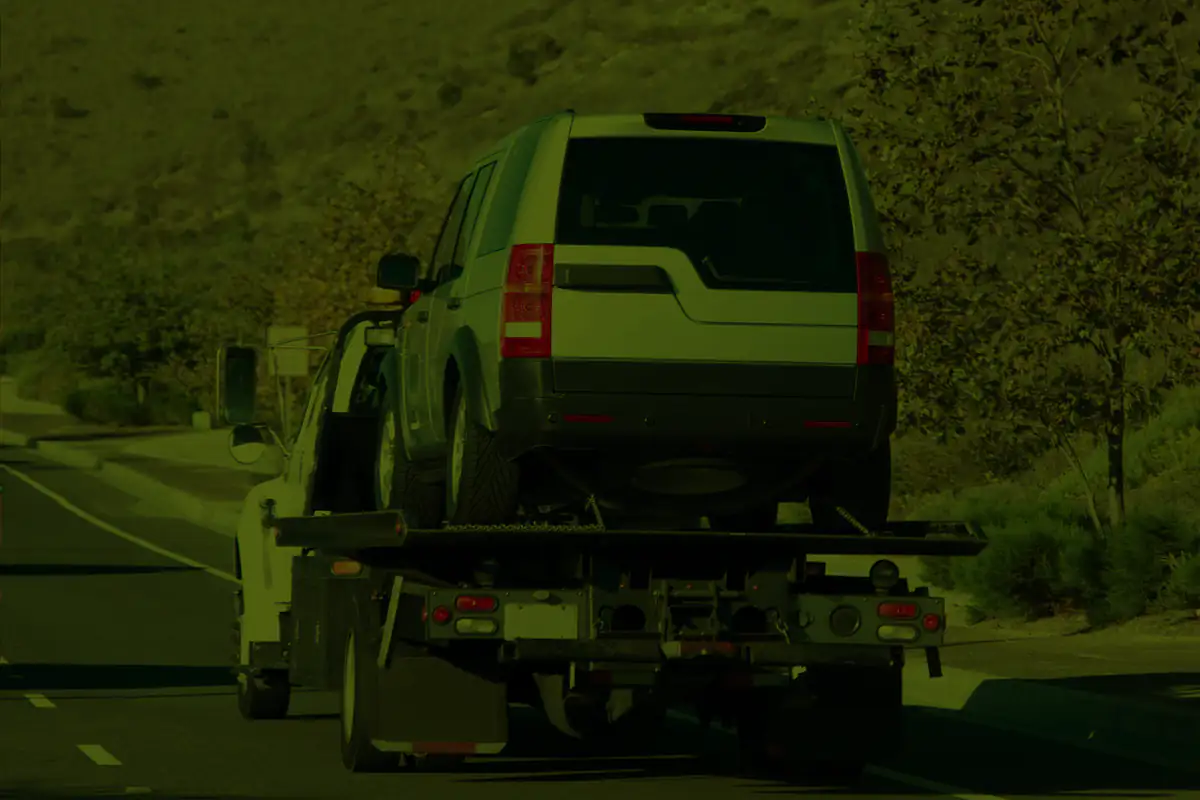
Can the Lender Repossess Without a Default?
No. 9A V.S.A. § 9-609 gives a secured party the right to take possession of the collateral after default. The contract defines default, and it is usually a missed payment or a lapse in insurance. A repossession with no default can be a conversion of your property, no matter how politely it was done.
The no-default cases we see most often trace back to the dealer rather than the lender: a spot delivery where the dealer never funded the contract and then sent a tow truck; a payment the dealer collected and didn't forward; a trade-in payoff the dealer never made. If the dealer created the "default," the claim may run against the dealer under the Vermont Consumer Protection Act as well as under Article 9. How a spot delivery turns into a tow truck is explained in that post.
What Is a Breach of the Peace Under 9A V.S.A. § 9-609?
Section 9-609(b) allows the secured party to proceed in one of two ways: pursuant to judicial process, or without judicial process if it proceeds without a breach of the peace. The statute does not define the phrase and leaves it to the courts. Under the generally applied standard, a repossession breaches the peace when it proceeds over the debtor's contemporaneous objection, involves force or the threat of it, or requires the agent to break into a closed structure. Common examples:
- You, or a family member, told the agent to stop and the agent took the car anyway.
- The agent entered a closed garage, cut a lock, or opened a gate.
- The agent brought or called the police to stand by without a court order, so that the police presence did the persuading.
- The agent used or threatened force, or misrepresented having legal authority.
A repossession that breaches the peace can be wrongful even if you were in default. The lender loses the protection of section 9-609, may answer for the resulting damages under section 9-625, and is generally responsible for the conduct of the repossession company it hired.
The lender's security interest covers the car, not your car seat, tools, or phone. An agent that refuses to return personal property, or conditions its return on a fee, may have created a separate claim.
What Notice Must You Get Before the Car Is Sold?
Before the lender can sell the car, 9A V.S.A. § 9-611 requires it to send a reasonable authenticated notification of disposition to the debtor and to any secondary obligor, such as a co-signer. For a consumer-goods transaction, which is what a personal-use car loan is, 9A V.S.A. § 9-614 spells out the contents: a description of the parties and the collateral; the method of disposition; a statement that you are entitled to an accounting; the time and place of a public sale or the time after which a private sale will occur; a description of any liability you will have for a deficiency; a telephone number from which you can learn the amount needed to redeem the car; and a number or address for more information.
A notice that omits the deficiency-liability language or the redemption phone number generally does not comply with section 9-614, and non-compliance can open the statutory damages in section 9-625.
Can You Get the Car Back?
Until it is sold, yes. 9A V.S.A. § 9-623 lets the debtor redeem the collateral by tendering fulfillment of all obligations secured by it, plus the reasonable expenses and attorney's fees the lender is entitled to. That ordinarily means the full accelerated balance, not just the missed payments, unless the contract or the lender allows reinstatement. Redemption is available any time before the lender has disposed of the collateral, contracted to dispose of it, or accepted it in satisfaction of the debt.
What About the Deficiency Balance?
If the sale brings less than the balance, the lender will usually pursue you for the difference. Two defenses come from Article 9. Every aspect of the disposition must be commercially reasonable; a car dumped at auction for a fraction of its value invites that challenge. And when the lender failed to comply with the notice or disposition rules, Article 9 can limit or eliminate the deficiency it may collect. Whether either defense fits your loan is a question for counsel who has read the file.
What Can You Recover for a Wrongful Repossession in Vermont?
9A V.S.A. § 9-625 is the remedies section. Under section 9-625(b), a person is liable for any loss caused by a failure to comply with Article 9. Under section 9-625(c)(2), where the collateral is consumer goods, the debtor may recover in any event an amount not less than the credit service charge plus 10 percent of the principal amount of the obligation, or the time-price differential plus 10 percent of the cash price. On a $25,000 loan with $6,000 in finance charges, that statutory floor works out to $8,500 before any actual damages are counted. Section 9-625(e) adds $500 per violation for other specific Article 9 failures, such as a pattern of noncompliance with the post-disposition accounting rules in section 9-616.
Where the repossession also involved a deceptive practice by the dealer, 9 V.S.A. § 2461(b) may add the consideration paid, exemplary damages up to three times that figure, and attorney's fees; see Vermont Consumer Protection Act claims against car dealers. The figures here are statutory amounts set by law, not results in any case.
What Matters After a Repossession?
- What happenedThe date, time, place, what was said, who was present, and whether police were there are the facts a breach-of-the-peace claim turns on. Photographs of damage to a driveway, gate, or garage are evidence of how the car was taken.
- The noticesThe notice of disposition, its envelope, and any post-sale accounting show whether section 9-614 was followed. The mailing date relative to the sale date matters.
- The loan fileThe retail installment contract, the payment history, and any conditional delivery paperwork from the dealer show whether there was a default at all.
- EvaluationDocuments submitted through the free case evaluation are reviewed by an attorney. If an attorney can assist, you'll receive an intake questionnaire and retainer agreement. The Attorney General's Consumer Assistance Program also accepts complaints about lenders and dealers.
Vermont's general civil-action statute, 12 V.S.A. § 511, sets the deadline, and the clock can start earlier than people expect. Which deadline applies to a particular repossession is a question for an attorney who has reviewed the documents; auction records and repo agent reports do not last that long.
Wrongful Repossession in Vermont: FAQ
Can a repo agent take my car from my driveway in Vermont?
Do I get notice before my repossessed car is sold in Vermont?
What are the damages for wrongful repossession in Vermont?
Can the police help the repo agent?
Was your car taken without the right to?
Start a free case evaluationSubmit a free case evaluation. If an attorney can assist, you'll receive an intake questionnaire and retainer agreement.
This page is attorney advertising and general information, not legal advice. Reading it does not create an attorney-client relationship. Results depend on the facts and law of each matter; prospective clients may not obtain similar results. Statutory damages described are as set by law and are before deductions for attorney's fees and costs. Sue Your Dealer – A Law Firm, Hollywood, Florida · By appointment only · (954) 321-0507.